
This site is general information about Ecotrin packs and their labels. It is not medical advice, and it is not a substitute for a conversation with a doctor or pharmacist. Do not start, stop or change a daily aspirin regimen without talking to your health care professional, and always use this medicine exactly as the label directs.
One sentence stands on every page of this site, in the footer and in the body, in the same words each time: do not start a daily low-dose aspirin without talking to your health care professional. It is not our sentence. The American Heart Association makes it their standing advice, and we repeat it verbatim rather than paraphrase it.
What the sentence quietly assumes is that the conversation it prescribes will be a good one. Ten minutes in a consulting room goes fast, and the difference between a rushed exchange and a genuinely useful one is almost always preparation on the patient’s side of the desk. So here is the preparation: what the public guidance actually says, what to carry into the room, the questions worth asking while you have the professional’s attention, and what to write down before you leave. We keep this catalogue. We are not doctors, and nothing here is medical advice. Think of these notes as the folder you walk in with.
What the public guidance actually says
Two documents anchor everything on this page, and both are listed with reading dates on our routine page. The first is the drug regulator’s aspirin questions and answers, which lists what aspirin is indicated for: treating and preventing further cardiovascular events in people who have had a heart attack, a stroke or a mini-stroke, reducing risk in certain chest pain conditions, certain uses after revascularization procedures, relief in a list of rheumatologic diseases, and the temporary relief of minor aches and pains. The regulator is equally plain that lower doses are recommended for the cardiovascular uses than were once common practice.
The second is the heart association’s page on aspirin, and its through-line is caution. Aspirin thins the blood. That is how it helps prevent clots and also why it carries bleeding risk. The association states that the risks and benefits differ from person to person, that people over seventy taking aspirin to prevent a first heart attack or stroke may face more harm than good, and that a daily low-dose regimen should not be started without a health care professional. It also lists circumstances that deserve a conversation before any regimen: an aspirin allergy or intolerance, risk of gastrointestinal bleeding or hemorrhagic stroke, regular alcohol use, and upcoming medical or dental procedures, even simple ones.
Notice what both documents have in common: neither hands the decision to the reader. The drug regulator and the heart association both hand the reader to a professional, carrying better questions. Everything below copies that model.
It is also worth noticing what neither document is: neither is a summary of the other, and neither is finished business. Guidance gets revised as evidence accumulates. That is why we print the date we last read each source on the routine page, and why the revisit habit below exists. A conversation had five years ago was had with five-year-old guidance. Part of preparing today’s conversation is accepting that today’s answer may differ from the one a relative received in a different decade.
Who this conversation is for
Three kinds of people end up reading a page like this one. The first has been told by a doctor to start a regimen and wants to understand it better. Their conversation is mostly about the how. The second has read or heard that daily aspirin might be relevant to them, perhaps because of family history, and is deciding whether to raise it. Their conversation is entirely about the whether, and the association’s cautions above are aimed squarely at them. The third has been taking aspirin on their own initiative for years, without ever raising it with anyone.
That third reader is the one the public guidance worries about most, and gently: the regulator’s document devotes a question to people who self-treat. If that is you, the folder below is still the right folder. The only difference is that your first sentence in the consulting room is an honest inventory: what you take, at what strength, how often, since when.
What to bring: the folder itself
A useful conversation runs on specifics the professional cannot guess. The folder that supplies them fits on two sheets of paper.
| Bring | Why it matters |
|---|---|
| A complete list of medicines you take, prescription and over-the-counter, with strengths | Interactions are the professional’s first question, and memory under time pressure is unreliable |
| Any other pain relievers you use, such as ibuprofen, and how often | The regulator’s guidance flags other pain medicines as a topic to raise specifically |
| Supplements and vitamins, including the ones that feel too minor to mention | The professional decides what is minor, not the folder |
| Your history in one paragraph: past bleeding problems, stomach issues, allergies, procedures | The association’s caution list is built from exactly these items |
| Alcohol, honestly: what a normal week looks like | Regular use is on the association’s list of things to discuss first |
| Upcoming procedures, dental work included | The association flags even simple procedures as worth mentioning |
| The carton or a photo of it, if a specific product prompted the visit | Strength and label in front of you beats strength from memory |
The folder’s job is operational: ten minutes spent on judgement instead of on reconstruction, and nothing from the association’s caution list left unmentioned because it slipped your mind in the moment.
Assemble it the evening before, not in the waiting room. The medicines list is fastest built at the shelf where the medicines actually stand, bottle by bottle, strengths copied from labels rather than recalled. The history paragraph is easier written at a kitchen table than composed aloud under time pressure. Ten unhurried minutes the night before consistently beat twenty flustered ones in the corridor, and the folder that results is the one document in the room that nobody has to squint at.
The questions worth asking, while you have the room
Questions in a consulting room compete for time, so these are ordered. The first four are the decision. The rest are the practicalities that make the decision survivable at home.
One practical note on asking: say the questions rather than handing them over. A read-aloud question gets an answer in the room, in words meant for you, while a handed-over list tends to get skimmed and half-returned. The folder supplies the facts. Your voice should still carry the questions.
Ask whether a daily aspirin regimen makes sense for you specifically, given everything in the folder. Ask what, in your particular case, the benefit is expected to be, and what the bleeding risk looks like against it. The association is explicit that this balance is individual. If you are over seventy, or expect to be while the regimen runs, ask how that changes the picture, because the association’s guidance treats that age differently for first-event prevention. And if the answer is yes, ask precisely which strength is being named, in milligrams, and have it written down rather than remembered.
Then the practicalities. Ask what to do about the medicine around any procedure that gets scheduled later, and whom to call with that question when it arises. Ask how the regimen sits alongside each other pain reliever you might reach for in an ordinary month, ibuprofen included, since the regulator’s guidance marks that as a conversation worth having explicitly. Ask what would count as a warning sign worth reporting rather than watching. And ask when the regimen itself should be revisited, because a decision made this year is not a decision made forever.
Rehearsing the first minute
Consultations are won or lost in the opening minute, because the opening minute decides what the visit is about. Rehearse three sentences before you go. The first names the subject: I want to talk about whether a daily aspirin regimen makes sense for me. The second names the prompt: my father had a heart attack at sixty, or my previous doctor mentioned it, or I have been taking it on my own and want that reviewed. The third hands over the folder: here is everything I take and my history in one page.
Three sentences, under thirty seconds, and the professional now has the subject, the context and the data before the clock has meaningfully moved. Compare that with the common alternative, where the subject surfaces in the last two minutes of a visit booked for something else, and the answer is necessarily a rushed one. If aspirin is worth a decision, it is worth being the stated reason for the appointment.
Bringing a second pair of ears
For some visits, especially where the person deciding is an older parent, a second pair of ears changes everything. One person asks and listens. The other writes. Medical conversations are dense precisely at the moments they matter most, and the listener who is also the note-taker misses things through no fault of their own.
If you are the accompanying family member, your folder discipline matters as much as your presence: the medicines list you help assemble beforehand is often more complete than the one memory produces in the room, and the sheet you write at the end becomes the version of events the whole household runs on. The role is quiet, and it is load-bearing.
If the answer is no
A no is a result, not a failure of the visit. The association’s guidance exists precisely because for many people, at many ages and histories, the bleeding risk outweighs the preventive benefit, and the professional who says no is applying that arithmetic to your particular case. Write the no down with the same care as a yes, in four fields: the decision, the date, the reason given, and when the question should be reopened.
What a no rules out, specifically, is quiet self-enrollment afterwards: buying a bottle anyway and starting anyway would be taking the one decision the guidance reserves for professionals and handing it back to the aisle. This site sells these packs, and says this anyway, because a catalogue that respects its own product respects the label around it. The shelves will still be here if the answer changes at a future visit.
The natural slots: physicals and telehealth
The conversation does not require a special appointment if a natural slot is coming anyway. An annual physical is the obvious one: the folder travels well, the professional already has your chart open, and prevention questions are what the visit is for. If a physical is months away and the question feels current, a dedicated visit is worth booking rather than letting the subject drift another season.
Telehealth counts too, with one adjustment: the folder discipline matters more, not less, when nobody can physically hand over a page. Have the medicines list typed and ready to read or send, have the carton beside the camera if a product prompted the call, and take your notes with the same care as in a room. The medium changes nothing about whose decision it is. It only changes how the folder gets across the desk.
Advice from friends, forums and aisles
A neighbour naming the carton they take says nothing about which carton belongs in your hand. Their regimen is a data point about them: their history, their risks, their professional’s judgement. The association’s whole point, that benefit and bleeding risk differ from person to person, is a polite way of saying that another person’s prescription logic does not transfer, however sincerely it is offered.
The same goes for the aisle itself, this site included. A card here carries a strength, a count and a per-tablet figure, and not one of those weighs a history. The shelf can say what exists. It cannot say what belongs to you, and it should never try. Treat every non-professional source, ours among them, as background reading for the folder, and let the one conversation that counts happen where it belongs.
The pharmacist: the door between visits
Doctors decide regimens; pharmacists keep them workable between appointments. The questions that arise mid-regimen, how a newly prescribed antibiotic sits with what you already take, whether a cold remedy on the shelf doubles up an ingredient, what to make of a missed morning, are all pharmacy-counter questions. Bring the actual bottle: the strength and the expiry are printed on it, and with it in hand the answer usually takes two minutes.
The habit worth building is simple: one pharmacy, so that your record lives in one system, and no hesitation about asking. A pharmacist would far rather field a two-minute question than have it go unasked, and the counter conversation is free in every sense that matters.
What to write down before you leave
Consulting rooms are where precise instructions go to become approximate memories, so the last two minutes belong to paper. Write the decision itself, in a sentence. Write the strength in milligrams and the schedule in plain words, one tablet each morning or whatever was actually said, in the professional’s words rather than a paraphrase. Write the name of the person who said it and the date. Write the revisit horizon, and the number to call about procedures.
That sheet goes home and lives with the medicine, because it is the household’s local copy of the prescription logic. Every practical system we describe elsewhere, the refill arithmetic that keeps a bottle from running dry and the handling rules the coating asks for, starts from that sheet: the strength it names decides the carton, and the schedule it names decides which bottle size maps onto which stretch of calendar.
The follow-up loop
A regimen decision degrades quietly if it is never revisited. Health changes, other medicines arrive and depart, birthdays accumulate, and the guidance itself treats age as a live variable rather than a fixed one. The revisit horizon you asked for and wrote down is the loop that keeps the decision current: put it on the calendar the same day, next to the refill marks it will share the year with.
Between horizons, the sheet of warning signs the professional named is the household’s tripwire. The rule is the ordinary one for any serious medicine: what was named gets reported when it appears, promptly and without self-diagnosis, to the professional who named it. The paper record of marked mornings, described in the refill notes, earns its keep here too, because the first question in any such call is usually about what was actually taken and when.
Where the catalogue picks up, and where it stops
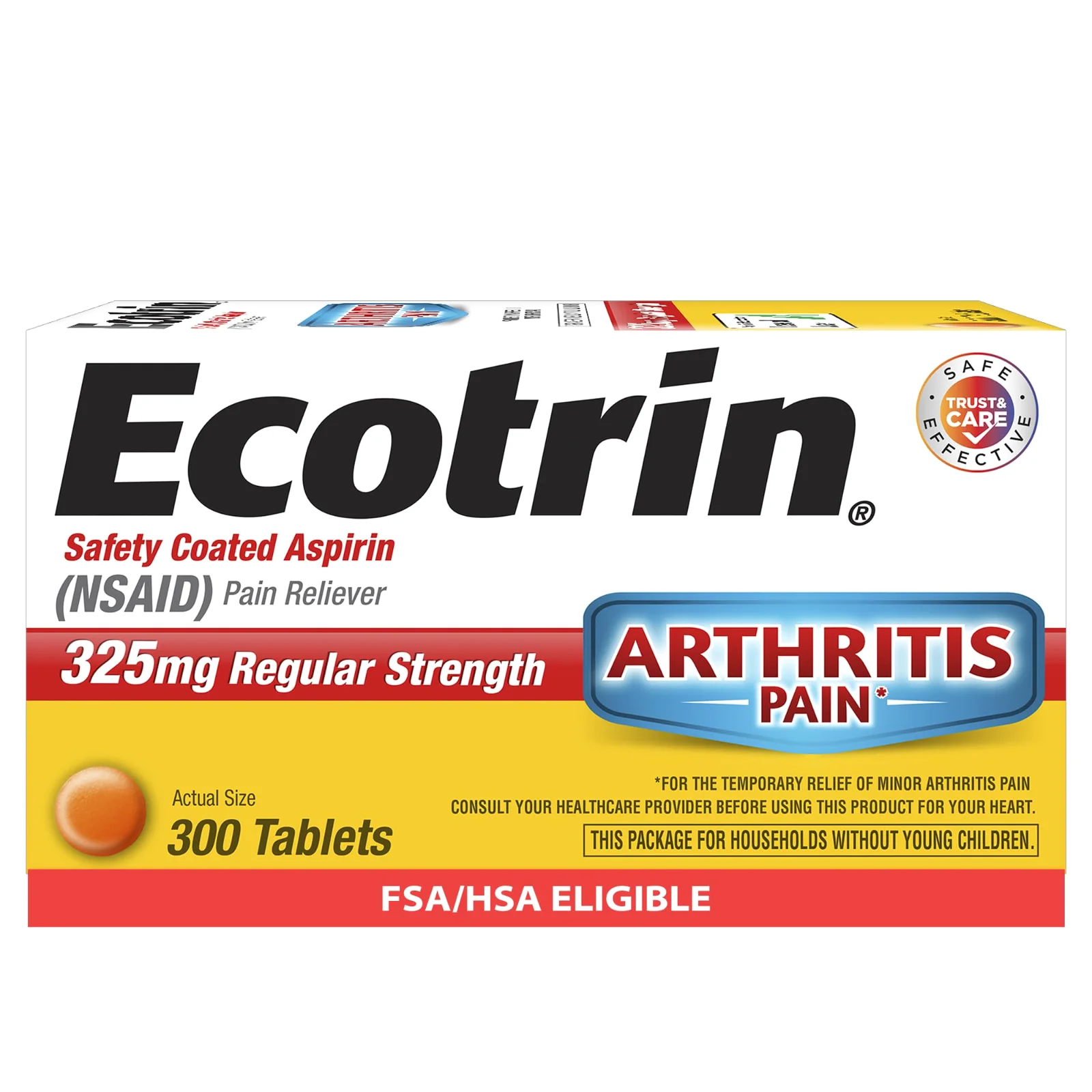
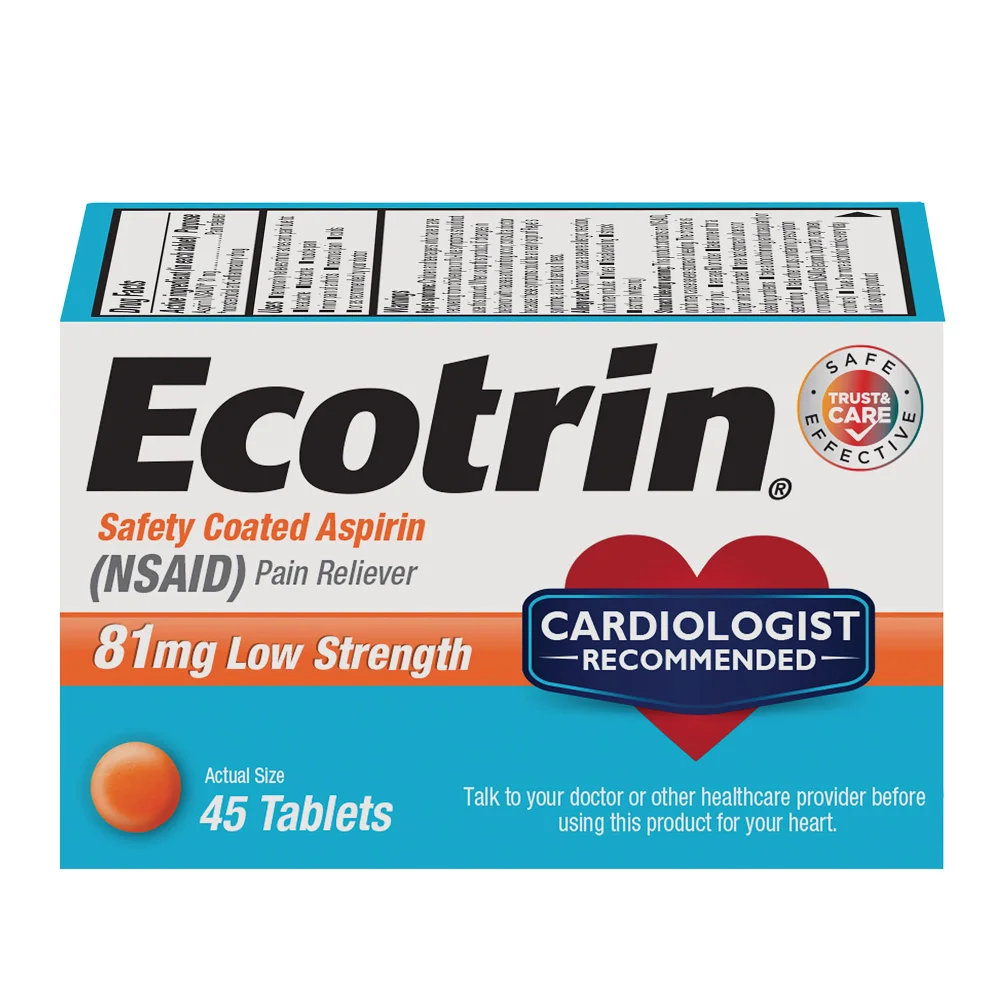
Once a professional has named a strength and a schedule, the shelf questions become easy, and they are the only questions this site answers. The Ecotrin shelves carry safety coated aspirin at 81 mg in bottles of 45, 150 and 365 tablets, and at 325 mg in bottles of 125 and 300, each card headed by its strength and count with the per-tablet figure computed beneath. If the sheet from the consulting room says 81 mg daily, the bottle sizes read as six and a half weeks, five months and a year of mornings.
The boundary holds in the other direction too, and it is worth stating one last time in plain terms. This site will not tell you whether to take aspirin, at what strength, on what schedule, or how it fits with anything else you take. Those are exactly the judgements the folder and the questions above exist to place in professional hands. What a catalogue owes you is honesty about the packs, arithmetic that checks out, sources that were actually read, and a standing refusal to blur the line between a shelf and a consulting room. The date we last read our sources is printed beside each of them on the routine page.
If a single page of this site earns printing, it is this one, folded into the folder it describes. The questions keep their order under pressure better on paper than in a head, and the table above doubles as the checklist for the evening-before assembly.
Preparation is not a substitute for the conversation. It is what makes the conversation worth the visit: ten minutes spent on judgement, a sheet of paper that survives the drive home, and a household routine that starts from what a professional actually said. Build the folder, ask the ordered questions, write the answers down, and let the shelves take it from there.
